Showing posts with label read 2018. Show all posts

Tuesday, 18 December 2018

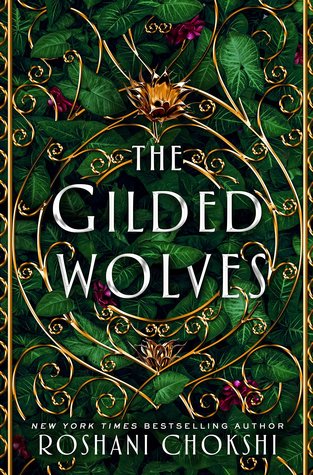
Review - "The Gilded Wolves"

The Gilded Wolves, The Gilded Wolves #1
by Roshani Chokshi
rating: ☆☆☆☆☆
published: 15th January 2019
spoilers? none

Goodreads

Wolves were everywhere. In politics, on thrones, in beds. They cut their teeth on history and grew fat on war.


Galley provided by publisher

If you enjoyed Six of Crows, in particular the unlikely found family trope, its heist shenanigans, and general chaos, then you had better be prepared to read (and fall in love with) this book. The Gilded Wolves is a gorgeously written, historical/dystopia/futuristic heist novel (no, that's not an oxymoron), with six wonderful main characters who you can't help but love.

The novel is set in Paris, 1889, and introduces the shadowy Order of Babel, who control Forgery, a form of magic. The Order "collects" Forged items from countries across the globe. Séverin, our main character (insofar as you can identify the main), is the last surviving member of the disgraced House Vanth, consumed with the desire to exact revenge on the Order for cheating him out of his inheritance. When a routine heist reveals something unexpected, Séverin and his team (Laila, Tristan, Enrique and Zofia) are enlisted by the Patriarch of House Nyx, Hypnos, to find a hidden artefact.

What I especially loved about this book was the characters. Firstly, the main cast is really diverse - four of the main six are characters of colour and two are mlm (one is explicitly bi, and allowed to crush on both male and female characters in the book). Though, yes, I do live in hope that one of the girls is going to be wlw as well, but who knows. Secondly, for most of the book, I genuinely couldn't decide which of them was my favourite. Of course, if you know anything about my type of character, you can probably pick out which of them ended up being my favourite, but that didn't stop me loving each of them individually.

Throughout the book, I think I was in awe of how well Roshani Chokshi can develop a plot and her characters simultaneously. Every one of them is fully rounded, and even when you're not in their POV, you can just feel them coming off the page with life. I think that was most obvious for Hypnos because for most of the book he was only viewed through other characters' eyes, but you still get such a clear idea of his character it's almost as if you did get that time in his POV.

I also want to gush over the plot itself for a bit. It's so intricately woven and thought out, and so engaging you don't even think to put the book down for a moment. And then just as you think everything's sorted out now, everything's happy, suddenly Roshani Chokshi pulls the rug from under your feet, breaks your heart, and turns everything upside down, so all you're left with is a cliffhanger, a lot of soggy tissues and at least a year-long wait to find out how it all gets resolved.

If there was anything at all that I didn't like as much about this book, it was the love triangle. I wouldn't have minded so much, but I disliked one of the sides of it. In my opinion, they'd have worked better as becoming really good friends instead of having relationship potential (and then I could escape that particular romantic angst), but I guess I'll have to wait to see where it gets taken in book 2. Also, I know I was expecting more of a historical atmosphere to this book, but it's not really historical so much as a kind of futuristic past (because of Forging), if that makes sense. That it's set in Paris in 1889 is relegated to the background almost, so if you're going in expecting it to be very historical or historically accurate, then you might be disappointed.

So, if I hadn't made it clear before now, this is definitely a book you're going to want to read. Maybe multiple times over just to fully absorb every little detail about it. Just make sure you're prepared for a broken heart.
Read More

Saturday, 15 December 2018

Review - "Don't You Forget About Me"

Don't You Forget About Me
by Mhairi McFarlane
rating: ☆☆☆☆☆
published: 1st January 2019
spoilers? vague ones

Goodreads

I don't know what he's thinking. I look forward to finding out.


Galley provided by publisher

TWs harassment (sexual and otherwise), past sexual assault (described)

As ever, here I am, having rated a book 5 stars, asking myself the biggest question: just how do you review a book that has just ripped your heart right out and then stitched it back into place? This, of course, may seem like an overexaggeration, but it's not. I'm sat in the kitchen of my flat having just gone through a rollercoaster of emotions and I don't even know where to start with it.

Don't You Forget About Me is a second-chance romance, with all the angst that comes with that. The romance in question happened 12 years previously, when Georgina was 18 and leaving sixth-form. Since then, she's not seen hide nor hair of Lucas, and has ultimately, compared to whatever expectations people had of her, failed in life. She perhaps hits rock bottom when she's sacked from her waitressing job and, in the same night, finds out her boyfriend is cheating on her. Then, her brother-in-law suggests her for a job in a new pub that's just opening.

Georgina is an engaging and funny, if unreliable, narrator - the book is in first person but I never felt like I had trouble getting into it because of that. Mhairi McFarlane has an easy to read and lovely style, and I got into this book from page one, around the time that I fell completely in love with Georgina. Because this book is less about romance per se, so much as about Georgina realising her own value and being kind to herself and coming to terms with what happened in her past. There is a romance going on (second-chance!), but it's more of a background thing, and one thing I loved was how, when everything comes out into the open and Georgina and Lucas finally talk about it all, they don't immediately get together afterwards. Yes, it gave me a little moment of please don't leave it like this, but it felt more right than him finding out about things and then falling into bed with her (I'm trying to be vague with this, sorry!).

I really loved how much of a slowburn this book was, both in the romance, and in Georgina's realisations. Everything felt so natural and it was done so well that it never even risked being boring for a moment. I genuinely couldn't put this book down (I spent 4 hours reading it while simultaneously telling myself this is going to be the final chapter I read, I'll go back to doing my last coursework of the term afterwards. Did I ever go back? Nope). It was absolutely wonderful and I wish I could go back and read it over again for the first time (maybe I'll just satisfy myself with a reread). I really think this might end up being one of my favourite books of 2018.

So, there's not much more to say besides: please please read this book.
Read More

Wednesday, 12 December 2018

Review - "Do You Dream of Terra-Two?"

Do You Dream Of Terra-Two?
by Temi Oh
rating: ☆☆☆ 1/2
published: 7th March 2019
spoilers? not really

Goodreads

Do You Dream of Terra-Two? is an alternate history where a planet with life-sustaining capabilities has been discovered and, in 2012, the first expedition is sent out to try and colonise it. It's the story of the six young astronauts who go on that 23-year-long mission, and their journey into space.

This isn't an action-packed book, far from it. It's a character-driven novel, where you might start out thinking you don't really like all of the characters, but most of them grow on you slowly and sneakily. It's a long book (over 500 pages), and you get POVs from every character (though some more than others), so you really get to understand each of them, their worries and their motivations. Which is good, don't get me wrong. I did like that aspect of it. However, for three quarters of the book, there was hardly any conflict (or, what conflict there was happened quickly and ended quickly too) or action. And I was mostly fine with that (for once. You know me and action), but around two thirds through I did start getting a little bored. The last quarter of the book was amazing, because things were happening, but between two thirds through and three quarters, I felt like it drifted a little.

Linked to that, the number of POVs was a little overwhelming at times. On the one hand, it was good to see all the characters, but on the other, I wasn't all that interested in one or two of them, so I kind of skimmed their parts. The switches between the POVs sometimes felt really abrupt, almost as if there should have been more to come, which got cut out. That also contributed to the plot occasionally feeling kind of bitty, like getting snapshots of their life instead of a continuous arc. (Which, I get because it covers a whole year in a 23-year mission, but I did feel like maybe it could have been woven together a bit more seamlessly at points.)

Because it was so bitty, the conflict that did happen before 75% felt almost like neither it nor the aftermath of it were given time to develop. For the buildup that was less of a problem, because there was always some undercurrent of it running through previous parts, but I definitely thought sometimes the aftermath could have done with being dwelt on a bit longer (or even the conflict itself at points). I had a similar issue with the declaration of love, because that distinctly felt like it came out of nowhere. Although it wasn't underdeveloped, it could have done with even more development.

This may all sound somewhat negative, but I did enjoy this book, for sure. Like I said, for most of it I didn't mind the character-driven aspect, and I really loved the last quarter. And the kind of forced found family trope was done pretty well too (so much that I was really sad about the ending). It's just that one twelfth of the story where it started to drag and I got bored that's made me rate this 3.5 stars instead of 4.
Read More

Monday, 10 December 2018

Review - "Pulp"

Pulp
by Robin Talley
rating: ☆☆
published: 13th December 2018
spoilers? yeah

Goodreads

I was really looking forward to Pulp. Historical books with LGBT characters, when they don't end in tragedy, are one of my favourite genres. And I had hopes that this one would fall into that category. Unfortunately, it turned out just not for me.

The story alternates between Janet in the 1950s, finding her first lesbian pulp fiction, and Abby in 2017, who embarks on a project for school about pulp fiction. Janet is in the throes of first love, while Abby is coping with breaking up with her first girlfriend and the falling apart of her parents' marriage.

One of the things I loved about this book was that it used the word "lesbian" a lot, and that's actually fairly uncommon in YA lit. Within the first chapter alone, it was used around ten times. Unfortunately, that kind of dropped off in favour of using qu--r (a word I'm not particularly fond of, but we'll get to that). However, it was really refreshing to see a character explicitly label themselves as a lesbian.

My favourite part of this book was the parts which discussed the LGBT community in the 1950s. LGBT history is not something I know a lot about, and it's something that's pretty much never taught, so that was really interesting. I almost wished the entire book was set in the historical context.

But, while I liked those aspects of the book, a lot of it really just bored me. It was a long book, and I wasn't actually that interested in Abby's part of the story - she seemed kind of like an overdramatic brat to me and I couldn't tell if that was there being too much of an age difference between me and her, or if she was genuinely an overdramatic brat. Possibly part of why I didn't like Abby's part was because of her insistence of using the word qu--r to describe characters in the 1950s. When qu--r was a slur even more so than it is now. I don't like applying that as a blanket term to anyone, let alone people who are (a) now dead, and (b) lived in a time when it came with such horrors. So the constant use of it in this book really put me off.

One last thing: I liked the twist at the end, because I was all prepared to be set up for Yet Another Tragic Ending (about halfway through it looked like that was going to happen). The problem was, I had been so bored by the book dragging up to that point, that I just wanted it to end.
Read More

Saturday, 27 October 2018

Review - "Skyward"

Skyward
by Brandon Sanderson
rating: ☆☆☆☆☆
published: 6th November 2018
spoilers? no

Goodreads

But remember, Spensa. You get to choose who you are.


Galley provided by publisher

I have always found it incredibly hard to review books I loved, and Skyward by Brandon Sanderson is hardly going to break that streak. Because it's been about six hours since I finished it and I'm no closer to working out what I want to say about the book.

Let me start with the plot. The human race has been driven almost to extinction, and the survivors are trapped on a planet, surrounded by space debris and periodically attacked by an alien race called the Krell. Spensa, the main character, is desperate to become a pilot and a hero, after her father is branded a coward and her family shunned. While investigating the caves and tunnels around the city, Spensa stumbles across a ancient ship, which seems to be the key to her dream.

One of the things I loved about this book was how, despite being a book centered around the idea of a flight school essentially, there is a lot of action still going on. Because the human forces are continually being depleted by the alien incursions, the cadets are also employed in the defense of their base and the city underneath it. Sometimes I'll get bored reading about books set in schools because they spend a lot of time on lessons and rivalries, and the action won't come until the last third of the book, but that's definitely not the case here. The plot is action-packed, but still takes the time to make you fall in love with every single character, even when you only have a few chapters with them.

As well as making you fall in love with the characters, Brandon Sanderson has this way of developing relationships so realistically, and heartbreakingly at times, and I love it so much. I mentioned briefly that, unlike a lot of books based in schools, there aren't any rivalries in this. Spensa doesn't come into class to find a rich kid who detests her on site and wants to make her life hell. There's none of that, and I really really loved it. Not only is there none of it, this book gives you such a nice found family trope, and I'm really weak for those. I loved each and every one of Skyward Flight, really really loved them, and I know I've used the words "really" and "love" way too much but I genuinely don't know how to put into words my feelings about these characters. (Also, there is an excellent slowburning enemies to friends to maybe (hopefully) lovers going on between Jorgen and Spensa, so I'm desperate to hear whether there'll be a sequel.)

In true Brandon Sanderson fashion, though, this book also broke my heart. It's a war, we're told it's a war, and that there are high casualty rates among pilots, but still I wasn't prepared for any of what happened. That's an unfortunate byproduct of loving every single character Brandon Sanderson writes when I just know that's he's five minutes away from tragedy at any given time.

If this rambling review hasn't convinced you to read this (and I wouldn't blame you), then just know this: Brandon Sanderson's sci-fi is just as good as his fantasy. A.K.A. you should read both.

(Also, found family.)
Read More

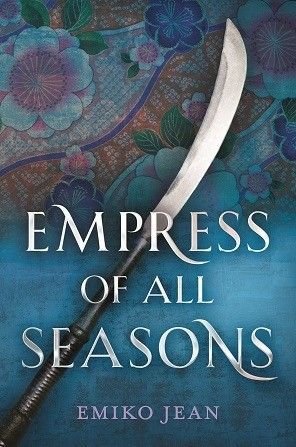
Review - "Empress Of All Seasons"

Empress of All Seasons
by Emiko Jean
rating: ☆☆
published: 8th November 2018
spoilers? yeah, fairly big

Goodreads

Galley provided by publisher

For the most part, I think this is just one of those "it's not you, it's me" books. There are reasons that I struggled with it that I know are subjective, which others may not find to be as off-putting as I did, but there were also a few points that I would say are less so.

Empress of All Seasons tells the story of Mari, a yōkai, who enters the competition to win the hand in marriage of Taro, the emperor's son. The competition involves overcoming the Season rooms in the palace, each designed by a priest to represent the four seasons. In this world, yōkai are all registered and collared, and treated as slaves, and Mari has been trained since a child to win the competition and steal the Emperor's treasury.

Initially, I liked a lot about this book - the writing was good, the characters seemed great, and I loved the concept, so I had high hopes. Unfortunately, things didn't quite pan out as I expected.

The writing got somewhat tedious after a while. I think it was partly because I took a lot of breaks reading this, and I read some books with really good writing, then coming back to this one made me realise that it wasn't actually all that good. So I got bored of it really quickly. Not to mention some of the scenes were really cringey, like, so cringey I had to skimread. Like the part where Mari confronts another yōkai in the Winter Room. Linked to the writing, I found the pacing a bit strange. Everything happens really quickly (after Mari reaches the palace) and, although it never felt underdeveloped because of that, I did feel like occasionally some scenes, particularly those where the contestants were in the rooms, could have stood some more time dedicated to them. The end was also incredibly rapid. The final battle itself isn't, and is possibly one of the only times I felt like a scene got the time it needed, but the entire bit after that is summed up in an epilogue chapter, when, quite honestly it was enough plot to take an entire other book.

As with the writing, I also started disliking the characters by the end (though never Mari, she was my favourite), particulary Taro and Akira. In fact, I just disliked Akira right from the start. He was in love with Mari, so he spent most of his time obsessing over her, and it was so damn tedious. His only motivation for doing anything was that he loved her. Like, I got it the first time Akira! Also, both he and Taro referred to Mari as "his" multiple times, because yes, of course, you love her, suddenly she belongs to you. I honestly wanted to tell both of them to get over themselves. The love triangle aspect (though was it really a love triangle when Mari didn't really seem to like, let alone love, either of the potential love interests?) just tired me out in the end.

Finally, there was a part I was fairly unimpressed by, which may or may not fall into the bury your gays trope, because it's more of a vague hint than anything and I could be taking things completely wrong. Asami, who joins with Mari in the competition (and don't get me started on how this would have been a much better ship than any of the heterosexual ones), is killed in the Winter Room, leaving Mari to become champion. Now, she's been a spy for the yōkai Resistance, headed by Hanako. On finding out about Mari's death, Hanako is upset, because she loved her. The reason why I'm not sure whether this is actually a case of bury your gays is that, while I took that to mean romantic love, with Asami and Hanako being a couple, that may well have not been what was intended. And it's also not clear whether Asami reciprocated that. But if that hint is right, then it's really disappointing because, in a book saturated with heterosexuality (there are two rōnin at the start who have a "brotherly bond", and I was like, hmmm), there's firstly, only a vaguely hinted gay couple, and secondly, one dies. So, I'd really like to give Emiko Jean the benefit of the doubt, but I've been burned a few too many times for that.

Ultimately, that's why I rated this book down to 2 stars, where I might have given it 3. That and the fact that, although the concept sounded amazing, I didn't really click that well with the execution.
Read More

Tuesday, 16 October 2018

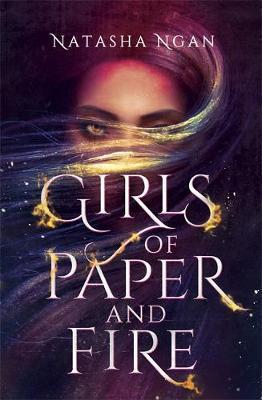
Review - "Girls of Paper and Fire"

Girls of Paper and Fire
by Natasha Ngan
rating: ☆☆☆☆☆
published: 6th November 2018
spoilers? no

Goodreads

I know it now with a certainty that has fitted into the lost core at the heart of me, as hard and angular as my hope was soft and shimmering. The King will not have me.


Galley provided by publisher

TW for sexual assault/sex slavery, rape, violence

A good f/f fantasy novel, with a well-paced plot and good writing was starting to seem like some kind of mythical creature before I read this book. Too often, it felt like the focus was more on almost forcing a relationship rather than developing a good plot and letting the relationship build up of its own accord. That is definitely not the case here.

Girls of Paper and Fire tells the story of Lei, who is taken from her village to become a Paper Girl, a pleasure slave to the Demon King. Paper Girls are not allowed to take lovers, let alone fall in love, but it's in the Women's Court that Lei starts to fall for one of the girls alongside her.

One of the things I loved most about this book was the writing. I read Natasha Ngan's debut novel a while back, around the time it first got released I think, and I wasn't the biggest fan of the writing, I'll admit, (as well as the fact that the main character wouldn't stop crying) but the improvement between then and now feels astronomical (although bearing in mind I don't have that good a memory of the writing and it's probably coloured by my frustration with the main character). It's the perfect mix of description and action, setting the scene well, but also keeping everything moving when need be.

Tied into this is the plot. Sometimes, with fantasy books, particularly first books in series, it feels like the plot can drag a little in the middle. Either because there's overly elaborate worldbuilding or because a lot of time is spent getting to know the characters before the Big Moment happens at the end. Especially when there's some kind of lessons going on, it seems like those can make a book drag a lot. Not so in this one. I was never bored by the book, through a combination of great writing, likeable characters, and enough action happening that all I felt was increasing tension as Natasha Ngan ratcheted up the stakes.

Finally, the characters. They're all such good characters, even though not all of them are the good guys - they're still all complex. I particularly loved Lei and Wren, but also the more side characters of the other Paper Girls like Aoki and even Blue for a little bit. Heck, Natasha Ngan also had me feeling sorry for the goddamn Demon King for a hot minute (before I returned to my senses). I loved them, and I loved their relationships. Especially the one between Lei and Wren. It just felt so natural and normalised, even though in this fantasy world, there's a lot of misogyny and women aren't thought of as sexual beings outside of their relationship with men (although m/m relationships are mentioned as being not rare). That was probably my favourite thing about the book, that it makes the whole act of women loving women so natural. (Not to say that other f/f books make it feel unnatural, but there are just some that get it more than others.)

A brief point to end: this is a very heavy book at points. The whole concept is based on sex slavery, but there are scenes of gendered violence (including a non-graphic rape scene and a scene where someone is branded), and also general implications of sexual assault throughout. So that is something to be aware of.

But, overall, I think this is one of the best books I've read this year (and I've read over 300 at this point, so). And it's definitely one everyone should be preordering or preparing to read on 6th November.
Read More

Saturday, 6 October 2018

Review - "In The Vanishers' Palace"

In The Vanishers' Palace
by Aliette de Bodard
rating: ☆☆☆☆
published: 16th October 2018
spoilers? no

Goodreads

And then she'd wake up, gasping, trying to breathe, raising her hands to her face, remembering Vu Côn's touch on her skin, as wet and as cold as the oily river.


Galley provided by publisher

In The Vanishers' Palace is the first book by Aliette de Bodard that I've read, and boy is it a good one. It's an f/f, dark fantasy inspired by Beauty and the Beast and Vietnamese mythology, with dragons. If the whole premise doesn't get you, I don't know what will. (Perhaps an AO3 tags style description of the book by the author herself?)

The thing I most loved about this book was the relationship between Yên and Vu Côn. It starts off cold and unfriendly, given that Vu Côn effectively kidnaps Yên in "payment" for healing a member of the village. But there is still attraction there, and Aliette de Bodard develops it really well into something more romantic. And manages to have both Yên and Vu Côn develop as characters individually as well. (As do Liên and Thông, which was good to see, as they were more side characters.)

The writing and worldbuilding was also really good. The reader is somewhat thrown straight into the world with not that much explanation at times (especially with regard to the Vanishers), so I found that a bit difficult from time to time. Not so much that my enjoyment of the book was impacted at all, but still noticeably.

So, in summary, you should definitely mark this book to read. Because who doesn't love fairytale reimaginings, especially when they're sapphic. Aliette de Bodard is definitely an author I'll be coming back to.
Read More

Thursday, 4 October 2018

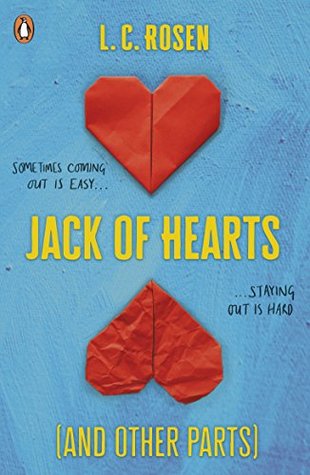
Review - "Jack of Hearts (And Other Parts)"

Jack of Hearts (And Other Parts)
by Lev A. C. Rosen
rating: ☆☆☆
published: 30th October 2018
spoilers? no

Goodreads

My first time getting it in the butt was kind of weird. I think it's going to be weird for everyone's first time, though.


Galley provided by publisher

I had kind of mixed feelings about this book. On the whole, I liked it, but there were distinct parts of it I was less keen on. Jack of Hearts (And Other Parts) is a story about Jack, a gay teen at high school, who is roped into writing a sex advice column for his friend's blog. But, in the process, someone makes it known that they have been stalking him. (P.S. the stalking storyline does get pretty damn creepy, so like. Just a warning.)

THE GOOD

- All the talk about sex positivity and safe sex. The whole premise of the book, that Jack gives sex advice, is somewhat leery for me, given the ages of the characters, but the actual advice given is (on the whole) really good, and focuses well on sex positivity and having safe sex and consent, which I really liked. As the main character is gay, there is more focus on sex in that context, though also some more general things that apply to straight couples too (less on lesbian sex, but that's kind of understandable in this case...). There were occasional things that I thought veered a little too close to some particular tumblr discourse for comfort, but, for the most part, it was really refreshing to see a YA book that's so open and frank and positive about it all (especially with gay sex because that's still seen as pretty dirty). One thing to note, while there are discussions of sex, the sex scenes in this are all fade-to-black.

- It's ownvoices, and there's huge value in books by mlm about mlm and things like sex that might otherwise be hard to find anything on. Basically, it's really important.

- In one article, Jack calls out these straight girls who are busy fetishising him, and it is truly glorious. I can think of a few books that might benefit from just reading that one chapter.

- The characters are funny and well-rounded (even though I did get irritated by them a few times), and actually it's a pretty compulsively readable book.

THE BAD (OR LESS GOOD)

- In a way, this links in with my first point in the good column. Yes, it was good having all this sex positivity, but I did feel just a bit skeevy reading about this all from a 16/17 year old. You: "Sixteen and seventeen year olds can be sexually active." Me: "Yes, but that doesn't stop me feeling fairly skeevy about it all." Maybe this is all because I'm not actually the target audience, true, but still. A point to bear in mind if you're reading this at somewhat older than sixteen.

- Also, he said he started "three years earlier", which would make him 13 or 14. Like. I'd say that's too early but. You do you, Jack. So long as it's safe and consensual.

- So, the characters are supposed to be about 16-17, but they read a whole lot older than that. I have genuinely never met a 16-17 year old who doesn't treat sex as something pretty funny, and is as mature about it as Jack was in this. It reads a little more like they're all college-aged.

- The fact that both Jack and Jenna hook up with college guys. I really don't understand why authors can't see that this is borderline creepy. They're sixteen. People in college are at least two years older than that and, eighteen year-olds hooking up with sixteen year-olds? Creepy. (Also, his mum? Weirdly okay with it?)

- While Jack's all "sex positivity!" and "not having a sex drive isn't a problem!" in his articles, he does make one comment in his narrative that I wasn't a particular fan of. It comes when he's discussing his best friend, Ben, who's "saving himself" for the right guy. And he references the fact that, in doing this, Ben is not having sex, not kissing boys, and just masturbating alone in his room. Which "must be miserable". So, he's all sex positivity, wait til the right time, in his articles, but in this? I don't know what's going on. It also never gets confronted, which was a bit sucky.

- Personal dislike: this book did use the q-slur as a blanket term, but like I say. Personal.

- When he uses femme to describe himself. As a cis gay guy.

- "The idea of having to think, 'Wait, is this okay with my boyfriend?' before kissing some cute boy I just met at a party." Jack, that's called cheating.

So, overall, I liked this book, though I definitely was not the target audience for it. But it's one of those ones that shows the importance of having ownvoices books about topics like this. It was a whole lot more engaging than yet another straight woman trying to tell me how gay boys/men feel.
Read More

Tuesday, 2 October 2018

Review - "What If It's Us"

What If It's Us
by Becky Albertalli and Adam Silvera
rating: ☆
published: 9th October 2018
spoilers? minor

Goodreads

I don’t know if we’re in a love story or a story about love.


Review also posted on Reads Rainbow

Galley provided by publisher

I did think that perhaps this was just one of those where I've grown out of the authors, but I actually reread Simon vs the Homo Sapiens Agenda earlier this year and still liked it just as much as the first time round, so it can't just be that. And this book did seem a whole lot more cringeworthy than any other books I've read by either author.

To summarise the plot: Arthur meets Ben as he's getting rid of his ex-boyfriend's things at the post office. Unfortunately, before he can get a number, their meeting is interrupted by a lederhosen-clad flash mob (yeah, this was the first part where I went, really?). Anyway, that's the first 30 to 40 pages or so. The next 120 pages is dedicated to them... not meeting again. And then they do meet again. And follow that classic romance pattern.

So, number one on my list of things I didn't really like about this book was the pacing. I don't need 120 pages of their day to day life before they meet again. And then I don't need another 150 pages of them dating (though seemingly, on Ben's part at least, while not actually wanting to date), before the inevitable and tedious (and overdramatic) breakup because of miscommunication. I feel like all this could have been condensed into a lot less than 450 pages. And so, because I have like, no patience, I got bored. Overall, though, I could have dealt with that, rated this book 2 stars maybe, but then came the kicker.

It's overwhelmingly cringeworthy. Every other paragraph feels like it includes a pop culture reference (Hamilton and Harry Potter being common ones - and don't even get me started on that part where Arthur gets Ben to listen to the Hamilton soundtrack and then Ben makes a comment about writing Hamilton/Harry Potter crossover fanfiction. I physically recoiled from the computer). One or two I could deal with, but the sheer number of them in this? I was cringing at least once a chapter and that's really not fun. Not to mention the part where Arthur mistakes someone for Ansel Elgort and I had to feel the horror of a real life person being inserted into the narrative and subsequent secondhand embarrassment. It was not nice.

A brief list of some other things that made me cringe along the way:

> "some kind of Kinsey scale Sorting Hat"

> when they talked about Pokemon fanfiction in real life

> when Arthur talks about the green M&M being sexy along with some Looney Tunes characters on their first date

> and Harry Potter porn

> mentioning Draco/Hermione fanfiction

But one particularly major cringe came from two points, both in Becky Albertalli's chapters. In one, Arthur and Ben are kissing when Arthur or Ben comments that maybe that's something Barack and Michelle (Obama) do on his birthday (why this comment? Because Barack Obama is Arthur's "forever president"?), and the other says more likely it's Obama and Justin Trudeau, while Joe Biden watches. Literally everything about this part is so creepy, starting with the fact that these are real people. But it does not stop here. Later on, a second joke is made along similar lines, but this time about porn between Mitch McConnell and Paul Ryan. Members of a party that wants to get rid of gay rights. Which, again these are real people, but this time it also just feeds back into the "all homophobes are secretly gay" line of argument. In the end, it was the cringeworthiness of the book that made me give it 1 star.

One last point: I didn't actually much like Ben as a character either. He's honestly a bit of a dickhead, and spends his time when he's starting to date Arthur comparing him to his ex-boyfriend. And he writes a self-insert fantasy story, which is honestly, just another cringeworthy thing to add to the list. (Someone also pointed out to me that he's a bit like an Adam Silvera self-insert, and I am really scarred.)

Maybe it'll be different for other readers, who don't find the pop culture references as cringey, and who are bigger fans of these authors, but in the end, it was just too much for me.
Read More

Monday, 1 October 2018

Review - "Love Like This"

Love Like This, Seven Shores #4
by Melissa Brayden
rating: ☆☆
published: 16th October 2018
spoilers? no

Goodreads

Her soul soared, her heart sang, and her life could go in so many different directions.


Galley provided by publisher

I knew before going into this that Melissa Brayden's writing style is not my favourite. But, since I was able to get past it in Eyes Like Those, I thought the same would be the case here. Unfortunately, there was a lot less in this book to actually engage me and keep me interested, so the writing became painfully... well, painful.

Love Like This is the fourth and final book in the Seven Shores series, which follows a group of young to middle-aged women living in an apartment complex in L.A. In this book, the focus is on Hadley, the assistant manager at a boutique on Rodeo Drive. The plot starts with her meeting Spencer, a designer, whose collection she hopes will revitalise the store and improve profits. And, of course, they fall in love. Cue some seemingly major, but in fact minor, obstacles such as: Spencer's fear of commitment (stemming, supposedly, from the fact her parents divorced, even though they remain good friends), Spencer's new job offer, Hadley's complete stupidity regarding this job offer... I could go on, but I'll leave it there. But, to summarise briefly, all problems that could be solved with a good sitdown and some communication! (I mean, for crying out loud, when they come to realise they are In Love, Spencer flies from Paris to L.A. and Hadley from L.A. to Paris. At the same time, so they completely miss each other. When they could have, I don't know, just sent a text?)

So, yes, I had some issues with the fact that all the conflict was created by miscommunication. But, beyond that, I just didn't really get invested in either of the main characters or their relationship. There was just no tension between them. Ultimately, they bored me. The only thing I was really interested in was Hadley's relationship with the other women in her apartment complex. And there wasn't nearly enough of it. (Now, if someone could just point me to an apartment complex of wlw, please?)

There was also the slight awkwardness I felt with having Spencer written by a white author, because, on that front, she seemed condensed down to comments about white people (awkward when it's effectively a white person saying it through a character of colour), and one mention of her having brown skin. Nothing else. Maybe she's Latina (that's probably the best guess I got from the book)? Maybe she's not? It's never explicitly mentioned and she honestly does just feel like someone's taken a generic white character and then changed her skintone for diversity points.

This all being said, there were some cute moments in this book, particularly Isabel's proposal to Taylor and their subsequent marriage. But honestly, that was probably my favourite part in the book. Which really says a lot about the book.
Read More

Friday, 28 September 2018

Review - "The Queen's Thief" series


The Queen's Thief
by Megan Whalen Turner
overall rating (so far): ☆☆☆☆☆
published: 1996 - 2019
spoilers? hopefully no, I tried my best to avoid them

Goodreads

The king lifted a hand to her cheek and kissed her. It was not a kiss between strangers, not even a kiss between a bride and groom. It was a kiss between a man and his wife, and when it was over, the king closed his eyes and rested his forehead in the hollow of the queen's shoulder, like a man seeking respite, like a man reaching home at the end of the day.


If you've followed my reviews at all on Goodreads, you will know that books that don't contain a lot of action and me do not really get along. So, on the face of it, maybe you'd have thought that me and this series wouldn't get along either. Well, in this case, you would be wrong. Because although there is not huge amounts of action in the series, Megan Whalen Turner just does character-driven fantasy novels so well that I was consistently overwhelmed by how much I loved these books and characters. I wrote a brief review of The Thief when I first read it about two years ago, but now I've finally got myself together and read the rest of the series, I'm going to write a review for all of them at once. (As well as I can, without any spoilers, because you want to go into this series without any idea of what's going to happen. Trust me.)

I'm going to break this up into chunks in an attempt to actually produce something coherent, so, let's begin.

THE CHARACTERS

Having said that the series is character-driven, I figure I might as well start with the characters themselves. And specifically the fact that I love each and every one of them. In The Thief, we are introduced to Gen, a thief, who is languishing in the cells in Sounis, when the magus of Sounis picks him up out of them in order to steal something for him and the king. Gen is a compelling and funny narrator, and also [spoilers redacted]. And I don't think I've loved a character so quickly in a long while. And it's not just Gen I loved immediately. There was Sophos and Pol and Eddis too, and in later books, Costis and Kamet. Even the characters that you don't like straightaway have a tendency to grow on you: see the magus and Attolia. (No, but seriously, if you want an example of how to make an initially unlikeable character likeable, look no further than The Queen of Attolia. Melina Marchetta says she took inspiration for something Evanjalin does in Finnikin of the Rock from Megan Whalen Turner. Just so you know the level of pain we're operating on here.)

One of the reasons the characters are so wonderfully compelling, is that they all are realistic and flawed characters. Gen is stubborn and incalcitrant, even if his heart's in the right place, and he never tells anyone anything about his plans. Attolia is cold and also pretty stubborn, but when it comes down to it, just afraid of being vulnerable. I could go on and on about all these characters, but I won't subject you to that. Instead, just take my word for it that these are some of the most complex and appealing characters I've ever read.

(And they absolutely break my heart but that's a whole other thing.)

THE RELATIONSHIPS

You know what the best thing about having such great characters is? The relationships between them. I would tell you my favourites but, uh, that means spoiler so I'll hold off on that for now. So, given that I can't tell you specific relationships I liked and therefore why I liked them, I'm just going to ramble on a bit about them in a hopefully non-specific manner.

Firstly, because the characters are so complex, so are their relationships (case in point, this one I cannot mention because spoilers, but which everyone who's read the books will know I'm talking about). But I don't just love the complexity of their relationships, I also love just how detailed Megan Whalen Turner is in developing them, and how carefully she does it, until you're at the point where you think, okay, I can see why X just forgave Y that. (Yes, it's that specific example again.)

And beyond that, the development just feels so natural - slow and incremental and, above all, subtle. You're never explicitly told how characters feel about each other, but it's just there in the writing and GOD! I love it so much.

THE PLOT

Finally, let's talk plot. Like I said earlier, I generally have an aversion to books that don't have a lot of plot and rely on character-driven arcs. This was a definite exception to the rule. There's something about Megan Whalen Turner's way of writing character-driven arcs that has me captivated despite the lack of significant action for most of the book. It reminds me a lot of Melina Marchetta's ability to do so (not surprising given Marchetta said she took inspiration from this series. Perhaps that should have been a sign that I was undoubtedly going to love it).

Unsurprisingly, given how the rest of this review has gone, there's actually very little I can say about plot that doesn't spoil anything. (Like, seriously, it's one of those series where you absolutely cannot read the blurb of the next book until you've read the current one. Just don't do it. Do not.) But, as with the characters and relationships, everything about the plot is so detailed and well thought out and subtle, so that something will become significant long after Megan Whalen Turner first mentions it and you're just like OH, because it's so goddamn clever.

In conclusion, this review is a mess and I've really only managed to ramble all over the place, but I hope you can still see why I loved this series and maybe you'll be tempted to pick them up for yourselves.
Read More

Tuesday, 18 September 2018

Review - "The Bloodprint"

The Bloodprint, The Khorasan Archives #1
by Ausma Zehanat Khan
rating: ☆☆
published: 19th October 2017
spoilers? no

Goodreads

There is no one but the One. And so the One commands.


I picked this book up in the bookshop probably about 6 months back, mostly based on the fact that the cover is absolutely fricking gorgeous. Aaaaand it disappointed. (Cue my mum asking why I read such bad books. It's not my fault! I'm susceptible to a pretty cover, so what?)

So why did it disappoint? Primarily, the writing.

Let me take a step back for a second. The premise and the plot in this have a lot of potential, as does the main romance (although I'm so goddamn tired of beautiful protagonists who have men falling at their feet when it adds nothing to the plot). Yes, it's a fairly heavy-handed comparison to the Taliban (Talisman/Taliban? Get it?), but that's not the problem. The problem is the execution.

Ultimately, the writing is dull and even action scenes just kind of plod along. It's descriptive, maybe venturing into purple prose territory at times, but there's never a change in pacing between non-action and action scenes. Hence, the dullness. I also really didn't like some of the stylistic choices the author made.

Like finishing every* chapter like this.
With three short sentences.
Each as their own paragraph.


(* every, or rather, enough that I noticed and got annoyed)

Because it just made the writing seem choppy and disrupted. So the scenes felt choppy and disrupted too and seemed to lack a coherent flow (not entirely I'll admit, but enough). As well as this, some scenes happened without any apparent build-up. So, because the writing felt disjointed, the plot also felt disjointed and I couldn't get into it. It also seemed to me that there was a bit of a disconnect between certain scenes and the worldbuilding. I don't know why, but sometimes it felt like a particular scene was happening disconnected of the world it was supposed to be happening in (if that makes any sense). Maybe that was partly the writing style, maybe it was a product of me skimreading (although it happened in the second chapter, at a point where I wasn't actually yet skimming, so), I don't know. But it didn't help my enjoyment (or lack of) of the book.

In addition, I only liked one character of the whole cast (Wafa) and, while I didn't actively dislike any of the rest, that's not enough for me to go on. I just didn't really care about the rest. There was a second chance romance relationship full of potential, and it just ended up being as dull as the rest of the book. I didn't care about the angst in it, or the individual characters, so I sure as hell wasn't going to be able to care about the relationship itself.

One good thing, though. The end. Although I kind of called one of the reveals, there were some other really good ones that happened. And if I hadn't been so completely bored by the previous 400+ pages, then maybe that'd have tempted me to consider book two. But as it was, it did nothing.

So, in the end, I leave this note to self: if you're going to pick a book based on its cover, maybe read some of it first.
Read More

Friday, 14 September 2018

Review - "The Oyster Thief"

The Oyster Thief
by Sonia Faruqi
rating: ☆
published: 2nd October 2018
spoilers? a few

Goodreads

Galley provided by publisher

CWs: sexual assault

I had - if not high, then at least some - hopes for this book. The synopsis sounded intriguing, and I thought there was some good potential for enemies to lovers. A bit like To Kill a Kingdom, maybe. And the cover was lovely, so there was that too.

Unfortunately, it didn't work out - to say the least.

To start off with, the writing was fairly poor. I know that's something completely subjective and everything, but on the first page, there was mention of "Algae Appreciation Day" and "Horrid Humans Day", and it felt kind of... childish? For lack of a better word. So that kind of put me off the writing from the start. It wasn't flat out awful - I have read a lot worse - but it felt kind of clunky, especially when it came to the speech. You know how you can find some writing styles easier to read than others, like they read more naturally? This one is one of those that doesn't read particularly easily. So I struggled a bit with that.

Also concerning the writing, the author had a tendency to skip fairly rapidly between Izar and Coralline's point of view. Now, I get the value of minor cliffhangers, sure, but when there's one every few pages, but you just know you only need to read another couple of paragraphs before you find out what happens next? They don't really work. And, they kind of stopped me from getting properly into either Coralline's or Izar's story. I would be just about getting used to one, and then it'd change.

If the writing was what made me less keen on the book, the worldbuilding is what made me rate it 1 star instead of two. Firstly, the mermaid world is a direct mirror of a human world. Down to the misogyny and rape culture. Because why would you extend your imagination to come up with something new when you can just do that! There's a whole government system, there are police, detectives, houses, tables, corsets - none of this is a particularly interesting world. What are the chances, if you have two different species, with minimal contact, that they would develop into matching societies? Pretty fricking low, you'd have to guess. And yet. In this book, we're supposed to believe that merpeople hide away from humans but still have a mirroring society. But what is worse about this, is that we can't even escape tired old tropes like a sexual assault scene and some lovely misogyny in this merpeople society. Starting with the misogyny, what we get is this conversation between Coralline and her fiance:

"You've never left Urchin Grove before. You're delicate - like the algae after which you were named-" "I'm not delicate." "I'm sorry, I didn't mean it in an offensive way. What I mean is that you're fragile, feminine. You don't know how to wield a dagger-"


On top of this, Coralline is expected by her mother, and society, to just marry well, learn how to cook, provide babies. Sound familiar? (Along similar lines as this, when Izar gets turned into a merman, one of the first things he comments on is that... it's emasculating not to have hair on his chest? Because yes. Yes, that is What Makes You A Man. Please, spare me.)

Then we get to the rape culture. Let me set the scene. Coralline and Izar have just been to visit someone to help them on their quest, but he is killed while they're there, and Coralline seen clutching the dagger. So, they find the furthest away hotel they can, which is kind of a seedy place. And while they're getting rooms, Izar overhears these two mermen talking about how they would "like a piece of" Coralline, such that they ask for the room next door to where she'll be staying. Now, he doesn't tell Coralline this. Oh no. He rationalises it as he's using her to get what he wants, he doesn't really care about her. So, the next morning, the brothers break into Coralline's room and try to rape and kill her. And Izar has to save her. Because what is a fantasy story without an attempted rape scene so the hero can save the girl, huh? A lot goddamn better than this, I'm telling you. And that's the point where I just got angry and hateread the rest of the book.

In addition to all this mess, there was a particular idea that got propounded a few times that I really hated. It was centered around two characters (including the one who ends up murdered). Basically, his wife is dying, so he goes and finds the magical elixir to save her life. And apparently, according to Coralline, this means she's indebted for life to him. Because she ends up falling out of love with him, and leaving him for another man, and Coralline calls this selfish. It feels a lot like the author's pushing the idea that she doesn't have a right to decide she doesn't love him. Which is just stupid.

A few final points. First off, there's so much girl hating going on. There's not one single intimate and kind female relationship. Coralline has no friends besides her shark, her mother is absolutely horrible, Rosette is supposedly competing for Coralline's fiance's attention so is also terrible and spends her time spreading malicious rumours about Coralline, her fiance's mother hates her and her mother, her mother hates the apothecary, the list goes on. And it's so tedious. What is the point in writing this into your book? Personally, it's a guaranteed way to lose me as a reader.

Lastly, to top off the misogyny, a woman gets fridged in the last part. Because we didn't have enough of it yet.

So yeah. This book? Not worth it.
Read More

Wednesday, 12 September 2018

Review - "You'd Be Mine"

You'd Be Mine
by Erin Hahn
rating: ☆☆☆
published: 2nd April 2019
spoilers? a few

Goodreads

Galley provided by publisher

CWs: alcoholism, drug overdose, graphic description of suicide, PTSD, panic attack

You'd Be Mine tells the story of two country musicians: Annie Mathers, the daughter of two famous parents who died when she was 13, and Clay Coolidge, the bad boy in country music. After Clay is arrested drunk one time too many, his label makes a bargain with him - he convinces Annie Mathers to sign to them, and tour with her, and they don't drop him. Despite their reservations, they're attracted to each other from early on, though Annie doesn't want to end up like her parents and Clay has his own problems to deal with.

If I'm honest, I was, at the start at least, expecting something a little different to what I got. I don't know what exactly I was expecting, but it wasn't quite this. I think maybe it was that the MCs hit off so early, I was kind of wanting something with a little more slowburn. Perhaps with them not really liking each other to start, but growing on one another. But instead, they were attracted fairly early on. But then, their romance isn't that large a feature in the story, insofar as it's not the only plot. Instead, it's a fairly character-driven story, about Annie's rise to fame and Clay's dealing with his grief and alcoholism.

I liked that about this book. The characters were also so intriguing and realistic that I didn't feel like I got bored of the plot, or lightness of it, although the trope of sweet, innocent girl and bad boy is a little overdone and I did get somewhat bored by that. (Especially the whole "I'm not good for you" thing, which, okay, I understand in this context, but can we talk cliches?) I also really liked that Annie's love didn't "save" Clay from his alcoholism. Instead of falling into those tired, awful tropes, Clay gets himself help and afterwards they get together for real.

What I didn't really like about their relationship, however, was this: Clay at one point humiliates Annie in front of an enormous crowd - just before he hits rock bottom - but he never apologises for it. Not even after he's all better. It's just kind of brushed under the rug and never mentioned again. And I hated it. He treats her like shit in front of a whole stadium crowd and yet it's passed over, almost excused as a result of his alcoholism (and at this point, slight paranoia). Also brushed under the rug is the fact that he effectively cheats on Annie during the tour. Okay, so maybe that's a bit of an exaggeration, but he kisses Annie a few times and then, without talking to her, and without them obviously coming to the joint decision to stop, he hooks up with Lora. And, yes, all of this happens at the worst point of his addiction, just before he overdoses and hits rock bottom, but it's still on him. And he should still apologise to Annie. But he doesn't. After he's recovered, it all appears to be forgotten. So yeah. That kind of ruined the end for me.

Overall though, You'd Be Mine was an easy, well-written read. I just wish I'd cared a bit more about the relationship between the characters.
Read More

Tuesday, 4 September 2018

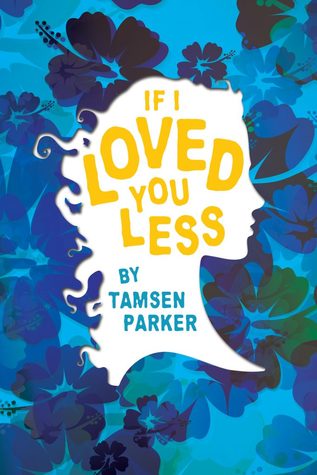
Review - "If I Loved You Less"

If I Loved You Less
by Tamsen Parker
rating: ☆
published: 20th September 2018
spoilers? a few

Goodreads

ARC kindly provided by Tamsen Parker

The problem I seem to have with Austen retellings is that I almost go into them with too high expectations, and I'm invariably disappointed. Because, let's be real, nothing can really reach the same levels as Austen herself - I should probably save myself the disappointment and stop thinking they might.

That being said, I think this book also suffered a little because Emma happens to be my least favourite Austen and the one I found most boring when I read it (yes, I still liked it, but if I'm ranking the novels, it's definitely sixth out of six). So, maybe I shouldn't have been that surprised when I didn't like this as much as I might have. However, I think I might still have rated this two stars instead of only one if I hadn't got so annoyed by some aspects of it.

But let me back up a moment, and talk about some things I liked about this book. It's set in Hawaii and the cast is more racially diverse than the original (not hard to do, obviously, but it's still something worth noting). I liked that Tamsen Parker decided to shake things up a bit like that. Also, the writing was mostly good - there were a couple of lines where I was just like what, but on the whole, it was very readable. Unfortunately, that's all offset by a whole part in the middle dealing with Theo's sexuality that annoyed me so much I had to rate this one star.

To start with, Theo is only attracted to women. She mentions this a few times, she rejects Brock and tells him she's only attracted to women, calls him out when he says maybe she's just not yet met the right man. And yet. She refuses to use the word lesbian. Because she isn't "fundamentally opposed to the idea of being with a man". But she's obviously not attracted to men in the text, so all I'm getting here is that she doesn't want to call herself a lesbian on the off chance that one day she'll meet a man she's attracted to. And then later on, there's this line: "the squishier label of queer had always felt more comfortable than the more rigid identity of lesbian". Like once you choose a label for your sexuality, that's it. There's no changing. I know the whole "sexuality is fluid" thing is a bit iffy, but. Sexuality can be fluid. Her labelling herself as lesbian now, because she's only attracted to women, doesn't mean she's completely incapable of realising later on that maybe she is attracted to other genders too.

And it really does feel in the narrative that this is just playing into a kind of "you're not a lesbian, you just haven't met the right man" idea. It would be, not fine, but better, if, when she thinks she's attracted to Austin, the author takes the chance to bring up comphet, and how maybe this attraction is just to do with the fact that she thinks she ought to be attracted to him, and that their fathers used to push it when they were younger (which is briefly mentioned but not framed in terms of comphet). Because it's obvious she isn't really attracted to him. It's clearly comphet. And it would have been really nice to at least attempt a discussion of that in this, when you have this example just sat there waiting for you. It would have made the whole labelling issue I had feel a lot less like "you just haven't met the right man". And, ultimately, I might have liked the book quite a bit more if that had been the direction taken.

But in the end, what I'm left with is yet another Austen retelling that leaves me feeling disappointed.
Read More

Friday, 24 August 2018

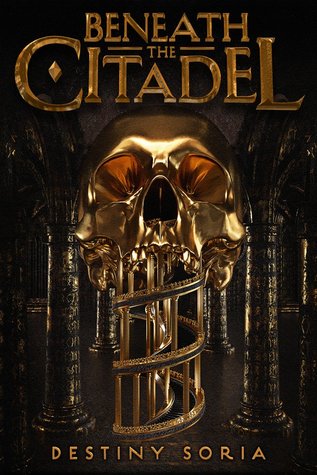
Review - "Beneath The Citadel"

Beneath the Citadel
by Destiny Soria
rating: ☆☆☆☆
published: 9th October 2018
spoilers? minor

Goodreads

We are not foretold.


Galley provided by publisher

Beneath the Citadel has been high on my to read shelf since pretty much the first moment I heard about it. The synopsis gives off vague Six of Crows vibes, so I'm fairly sure if you liked that, you will also like this one.

The story follows five points of view - Cassa, Evander, Newt, Alys and Vesper - five teens who are fighting against the corrupt council of the citadel itself. Cassa is the daughter of two rebels who died when the chancellor brutally put down an attempted revolution. Evander and Alys are the children of two apothecaries, who were branded rebels after healing a true rebel, while Newt is the son of a man who betrayed the rebellion. Vesper, the final character, is the grandniece of the chancellor himself.

The book opens up with Cassa, Evander, Newt and Alys being sentenced to death by the chancellor. It's definitely the kind of beginning to get you hooked quickly, and the plot is fairly rapid from thereon. In fact, the whole book only spans about five days. The POVs alternate, interspersed with occasional flashbacks into the past for exposition. I liked being able to see into all the characters' minds and everything, but occasionally it felt like having so many POVs left some plot threads underdeveloped, although that equally might have been because some of them also started in the past we did not see. Case in point: Vesper is shown within the first few chapters to have betrayed them to the council, but the only problem is, because you haven't seen how close Vesper and Cassa are, you've only been told it, there's no real emotional involvement in the betrayal. Despite that, the characters themselves were probably what carried the book along for me. Yes, the plot itself was good, but I wouldn't have cared about a lot of it if I hadn't really liked the characters. It did take a little while for Alys and Cassa both to grow on me, but by the end I liked them as much as everyone else.

One of the places this book falls down, however, is in its worldbuilding. There's an infodump right near the beginning, that includes explaining four types of powers (seers, sentients, diviners, and rooks) and bloodbonds, but I really still couldn't for the life of me tell you what the difference between seers and diviners is supposed to be. And even worse, I didn't realise that the citadel/city was even part of a country until about two thirds of the way through. Because the events happen solely enclosed within the city (which in itself seems to be somewhat insular and out of touch with the rest of the country), there was no need to really expand on the whole what's-the-rest-of-the-country-like idea. It felt instead like the city existed in a vacuum. Not to mention the fact that I can't really tell you that much distinctive about the city - there are some wards? Some tiers? Rich people live in the first ward, poor people in the lower wards? It's really not so much different from other fantasies in that respect. But like I said, I really did like the characters, and therefore the plot, so that kind of made up for any weaknesses in the worldbuilding.

Finally, I really appreciate that, in this book, a fantasy book (and a high fantasy at that), Destiny Soria chose to use the word "bisexual". Because there have been so many fantasy books I've read where such "modern" terms for sexuality have been eschewed in favour of just not giving labels. In a completely made up world, there's no reason not to use these terms. So yeah. I liked that.

And that ending. I don't want to spoil it, but I'll just say: Destiny Soria has some real guts.
Read More

Tuesday, 21 August 2018

Review - "Zero Sum Game"

Zero Sum Game, Russell's Attic #1
by S. L. Huang
rating: ☆☆☆
published: 2nd October 2018
spoilers? some

Goodreads

I'll thank you to talk to me like the heavily armed person I am.


Galley provided by publisher

If, like me, you enjoy plenty of action (and I mean plenty) in your books, then Zero Sum Game is the book for you. From page one, it's busy and intense, and there were definitely no points where I thought there was too much of a lull. So, all in all, perfect for me and my short attention span.

You might think, therefore, that I'd rate this book a lot higher than I have. Mainly, I didn't because, for all that the plot never let up, I had a little trouble always feeling sympathetic towards some of the characters, in particular Cas and Rio. I liked Cas, but every time she blithely insisted on asserting how much she trusted Rio and couldn't work with anyone who wouldn't work with him too, I had to roll my eyes. Because Rio is described as being a mass-murdering sadist. He is a psychopath (although apparently calling him this is crossing a line for Cas. And mass murder isn't? Okay). But Cas trusting him is supposed to be enough for other people to trust him too. So yeah. I could definitely see more where Arthur and Checker were coming from with this. Additionally, the plot somewhat revolved around Rio and I just couldn't side with him and Cas enough to actually care.

Then there was the little problem of how Cas just seemed to kill everyone who got in her way. I wouldn't mind so much if they were all genuinely bad guys but they just seemed to be anyone she categorised as impeding her. There was a part in the middle, when Arthur calls her out on this, where I thought here we go, here's going to be some soul-searching and character development, but it seemed to get dropped fairly quickly.

But lack of sympathy for characters aside, I enjoyed this book. It was an action-packed ride and definitely one I'd recommend if you're looking for a quick thriller to read.
Read More

Thursday, 9 August 2018

Review - "Outrun The Wind"

Outrun the Wind
by Elizabeth Tammi
rating: ☆☆
published: 27th November 2018
spoilers? some

Goodreads

Galley provided by publisher

To be honest, I think the hype for this book actually killed it for me. If it hadn't been so hyped and I came to it with no expectations, I'd have probably liked it more than I did. Because the writing is pretty good, the characters were alright, and there's a good romance. But it was hyped, and so I'm disappointed in how it turned out.

THE GOOD

- The relationship between Atalanta and Kahina was well-developed and nicely slowburning. They start off disliking each other - or rather Kahina dislikes Atalanta for reasons she can't actually explain to her, and Atalanta dislikes her in response to that - and then come together to work against the suitors later on. You might say that they start liking each other fairly abruptly, but besides that the development was realistic.

- The writing wasn't awful. OK, I'm definitely framing that in a negative way but I mean like. It was alright. Not much more, not much less. Readable, but nothing special.

- The characters were good - maybe not very nuanced - but they were good characters. I just didn't really like any of them particularly, which was unfortunate. I think if I'd liked them, things would have gone better for me.

THE BAD

- Just to clarify, I don't mean bad bad, but more like these-are-the-things-I-didn't-like bad.

- It just felt like your generic superpowered fantasy (albeit with an f/f relationship), where the characters happened to have names from Greek myths, and not actually a Greek myth retelling. I know, in the author's note, it said that she did research and took certain historical and mythological licences when writing it, but it doesn't even feel like it's actually set in Ancient Greece. Part of that was because of the language used ("insane", "lieutenant" are the examples that stick out), and the descriptions of their clothing (calling what Ancient Greeks wore a "dress" doesn't help in making it seem believable). Overall, though, besides the names for things, there didn't feel like that much effort in worldbuilding. I couldn't help comparing it (unfavourably) to Madeline Miller's novels in the end, because those are examples of how to take some liberties with the myth and still have it feel like it's actually set in Ancient Greece.

- Also, I know in the author's note she does mention that in the time of the myth - 3500BC or so - there wouldn't be coins as money and some of the city states wouldn't have been formed (although in the book she actually does have these things), but it's that kind of thing that takes me out of the story. Specifically in this book, I was taken out the story when Kahina started teaching Atalanta about forks. Which, as the smallest bit of research would tell you, were not used in Ancient Greece. Forks as we know them weren't actually used in the west until only a few centuries back. And that kind of anachronism really annoys me for some reason. It's the kind of detail that makes me think that, while there might have been plenty of research gone into the myth itself, research into the era might have been overlooked.

- There was plenty of plot to this book, but even so, I actually found it fairly boring. I think that's mostly linked to the fact that the writing was only alright, but also a bit to my next point.

- I didn't like any of the characters. Don't get me wrong - I didn't dislike them. But I just didn't actually like them. Ultimately, I didn't care about them, which would be a major factor in me liking a book (second to good writing). They are good characters, like I said before, but I didn't care.

- Finally, I just couldn't see Apollo as an out and out villain. Maybe part of that is because of Rick Riordan and the way he writes the Olympians. But for whatever reason, it just didn't work for me.

So yeah, in the end, this was just one of those books that was overhyped for me, meaning I didn't like it as much as I was hoping to.
Read More

Tuesday, 7 August 2018

Review - "Hearts Unbroken"

Hearts Unbroken
by Cynthia Leitich Smith
rating: ☆☆☆ 1/2
published: 9th October 2018
spoilers? minor maybe

Goodreads

Galley provided by publisher

Actual rating 3.5

Hearts Unbroken is set in Kansas, and tells the story of a high school production of The Wizard of Oz. When the drama teacher decides to take an inclusive approach to casting (including casting the main character's brother, Hughie, as the Tin Man), a group of parents in their mostly white, middle-class neighbourhood, takes exception. In the meantime, Louise, the main character, has started work at the school newspaper, and is paired with new kid Joey to take on the Features section.

What I liked about this book was that there were actually probably three strands of plot going on at once - firstly, with Louise at the paper and her budding romance with Joey, secondly, with the parents and their dislike of the casting, and finally, with Hughie and his relationship with the play and Baum. This saved it from ever getting dull in terms of plot, for me, and although it might seem a lot, it didn't ever get too crowded with plot. There were a few, more minor, plotlines that possibly went unresolved (Louise's first boyfriend, who she dumps at the start of the book for making bigoted comments about Native people, starts all these rumours about her after the breakup, but supposedly no one believes he isn't just running his mouth, so it's kind of brushed under the carpet when they meet one last time for "closure"), but overall, it was a solid book plot-wise.

Even though the plot was good, it did take me a little while to get properly into the book. I did like it, don't get me wrong, but I was mostly reading it without all that much caring about it. Part of that was because it was written like a series of vignettes rather than a fully continuous story so the plot seemed to start off moving really quickly, and I found that hard to read for some reason. Another reason was probably because I wasn't the biggest fan of the main character before she had her learning moment. She was kind of self-absorbed and a little self-righteous. But she also had some pretty good character development precipitated by her friend calling her out (at exactly the right time in the book, because I'd been getting a little bored before then).

As well as this, the start of the romance kind of bothered me. If only because I couldn't for the life of me see why it started (or continued for that matter). Joey seemed fairly arrogant and self-obsessed and kept boasting about his journalism prowess, and I couldn't work out what Louise actually saw in him. So maybe he was a nicer guy than Cam (the boyfriend she dumped), but there didn't seem to be anything there. Or at least nothing I was shown. I was told she didn't shut up about him to her friend Shelley or her brother Hughie but there was no evidence of that. (Just like, at the start, there was no evidence of Cam getting easily jealous until she mentioned it in one line - and this is the guy she thought she loved? Yikes.) But once the conflict had happened, and they were kind of broken up, I almost liked it more, conversely. Because it made Louise develop as a character.

So, overall, this book was one I liked a lot but didn't quite really really like (if that makes some sense). I did get more into it as it went on, but ultimately not enough to love it.
Read More